Category: Series 1

  • Elizabeth I

    Elizabeth I

    [et_pb_section fb_built=”1″ _builder_version=”4.11.2″ _module_preset=”default” background_color=”#1c1c1c” custom_padding=”0px||0px|||” global_module=”1198″ saved_tabs=”all” global_colors_info=”{}”][/et_pb_section][et_pb_section fb_built=”1″ make_equal=”on” specialty=”on” use_background_color_gradient_1=”on” background_color_gradient_direction_1=”90deg” background_color_gradient_stops_1=”#1c1c1c 60%|#ffffff 60%” background_color_gradient_start_1=”#1c1c1c” background_color_gradient_end_1=”#ffffff” background_color_gradient_start_position_1=”60%” background_color_gradient_end_position_1=”60%” padding_top_1=”8vw” padding_top_2=”12vw” padding_right_2=”10vw” padding_bottom_1=”6vw” padding_bottom_2=”12vw” padding_left_1=”10vw” padding_top_bottom_link_1=”false” padding_top_bottom_link_2=”true” padding_2_tablet=”0vw|10vw|0vw|10vw|true|true” padding_2_phone=”” padding_2_last_edited=”on|tablet” admin_label=”Hero” _builder_version=”4.16″ inner_width=”100%” inner_max_width=”100%” custom_margin=”||-61px|||” custom_margin_tablet=”||100px|” custom_margin_phone=”” custom_margin_last_edited=”on|tablet” custom_padding=”0px||0px||true|false” use_custom_width=”on” width_unit=”off” custom_width_percent=”100%” global_colors_info=”{}”][et_pb_column type=”1_2″ _builder_version=”4.16″ custom_padding=”|||” global_colors_info=”{}” padding_bottom__hover=”6vw” padding_left__hover=”10vw” padding_top__hover=”8vw” parallax__hover=”off” parallax_method__hover=”on” use_background_color_gradient__hover=”on” background_color_gradient_start__hover=”#1c1c1c” background_color_gradient_end__hover=”rgba(255,255,255,0)” background_color_gradient_direction__hover=”90deg” background_color_gradient_start_position__hover=”50%” background_color_gradient_end_position__hover=”0%” custom_padding__hover=”|||” background_color_gradient_stops__hover=”#1c1c1c 50%|rgba(255,255,255,0) 50%”][et_pb_image src=”https://wakingthedead.co/wp-content/uploads/2022/10/QE1-1.jpeg” title_text=”QE1-1″ align=”center” force_fullwidth=”on” align_tablet=”center” align_phone=”” align_last_edited=”on|desktop” admin_label=”Image: Elizabeth I” _builder_version=”4.19.0″ max_width_tablet=”200px” max_width_phone=”” max_width_last_edited=”on|tablet” animation_direction=”left” hover_enabled=”0″ box_shadow_style=”preset3″ box_shadow_horizontal=”40px” box_shadow_vertical=”40px” box_shadow_blur=”80px” box_shadow_spread=”-20px” box_shadow_color=”rgba(0,0,0,0.12)” global_colors_info=”{}” sticky_enabled=”0″][/et_pb_image][/et_pb_column][et_pb_column type=”1_2″ specialty_columns=”2″ _builder_version=”4.16″ custom_padding=”|||” global_colors_info=”{}” padding_tablet__hover=”5vw|10vw|5vw|10vw||true” padding_last_edited__hover=”on|phone” padding_bottom__hover=”6vw” padding_left__hover=”3vw” padding_right__hover=”10vw” padding_top__hover=”8vw” parallax__hover=”off” parallax_method__hover=”on” custom_padding__hover=”|||”][et_pb_row_inner _builder_version=”4.16″ global_colors_info=”{}”][et_pb_column_inner saved_specialty_column_type=”1_2″ _builder_version=”4.16″ custom_padding=”|||” global_colors_info=”{}” parallax__hover=”off” parallax_method__hover=”on” custom_padding__hover=”|||”][et_pb_text admin_label=”Short Bio: Elizabeth I” _builder_version=”4.18.0″ text_font=”||||||||” text_text_color=”#000000″ text_font_size=”16px” text_line_height=”1.8em” header_font=”Playfair Display|700|||||||” header_font_size=”90px” header_line_height=”1.2em” header_6_font=”Muli|700||on|||||” header_6_text_color=”#0ccead” header_6_letter_spacing=”1px” header_6_line_height=”1.8em” max_width=”600px” custom_margin=”||-2px|||” animation_direction=”right” header_font_size_tablet=”56px” header_font_size_phone=”32px” header_font_size_last_edited=”on|phone” locked=”off” global_colors_info=”{}”]

    Waking the Dead

    Elizabeth I

    1533-1603 England

    Through skilled diplomacy, uncommon wisdom, and unparalleled charisma, the brilliant and beloved “Virgin Queen” Elizabeth brought religious peace to England during the worst days of Protestant-Catholic conflict. And, with minor exceptions, she maintained military peace with other nations in the treacherous times during which Western European countries were incessantly vying for control of the New World…and each other. She also inspired extraordinary achievements by some of her most loyal subjects—from Sir Francis Drake to William Shakespeare.

    “To stay in the presence of conflict without flinching, without reaching for the weapon, without signing the order of execution, without agreeing to the marriage takes real courage.”

    PDF Version

    [/et_pb_text][et_pb_toggle title=”View Full Text” _builder_version=”4.16″ _module_preset=”default” global_colors_info=”{}”]

    Queen Elizabeth 1

    Every Thursday from May to September, Maslow’s friend Alma serves afternoon tea at 4 pm sharp. From October through March, she serves cask-strength single malt at 5 pm sharp. Homemade oatmeal cookies with the tea. Fine cheeses and crackers with the single malt.

    She takes April off. It’s planting season and she’s just too busy.

    Alma has been doing this for about three decades. On her screened-in porch in warm weather. In her formal dining room when it’s cold. Usually about a half-dozen people show up. Sometimes no one does, in which case she contentedly reads a book with her cat Ramona on her lap.

    “I’d like to catch a wild swarm sometime,” she says as Maslow comes in and pours some tea. She doesn’t look up. She knows it’s him. Or maybe it doesn’t matter.

    Alma’s latest passion is beekeeping. In the sixty years she’s lived on this land, she’s been passionate about many things: esoteric astrology, heirloom apples, companion planting, herbal medicine, several guys, and one son but, except for him and her grandchildren— she’s left all those pursuits behind.

    What began as a legendary commune in the 1960s has slowly returned to its original state—A 1780’s farmhouse on 85 acres of land. The cabins, lean-to’s, yurts, geodesic domes, and tents have all

    Waking the Dead — Queen Elizabeth 1 2

    disappeared or fallen into terminal disrepair, although Alma will always materialize a bed or couch for anyone who stops by. Particularly her fellow travelers.

    “Why is catching a wild one so important?” Maslow asks, sliding into the middle of the conversation she’s been having with herself.

    As Alma’s face has become increasingly worn, her eyes have grown only brighter. And her laugh more lovingly maniacal.

    “‘Cause I like wild queens, you idiot!”

    Over the next hour, Alma tells Maslow more than he ever expected to know about honeybees. By the time he leaves, his mind is swarming with queens.

    ********

    One of the recreational hazards of living in Vermont during the Spring is the annual return of Morris dancers.

    Morris dancers are a harbinger of warmer days; they make people smile; they hop around as if the sidewalk were covered with hot coals; they got rhythm (kind of); they drink lots of beer. Everyone loves them.

    Except Maslow. He finds them vaguely annoying. He can’t explain why. He just does.

    So when one approaches him the following Saturday, he walks faster; looks down, and acts like he’s thinking of something important:

    Like how to feed the homeless, solve global warming, or end the war— any war. Those are very popular subjects in Vermont. It’s obvious he shouldn’t be disturbed.

    “Semper Eadem!” an excessively cheerful guy chirps, shoving a flyer under his nose. Maslow takes it with a wan smile and puts his head back down to avoid further conversation.

    He rounds the corner, crumples the flyer, and drops it into the nearest trash bin. But the phrase stays with him. He knows Semper means “always”—like the Semper Fi he sees on Marine bumper stickers. But eadem? Maybe he said déadem? Which, to Maslow, sounds like a precious jewel. Or slang for a mob killing. Dead-em

    After looking up and down the sidewalk to make sure he won’t be interrupted by any other refugee from ye olde England, Maslow leans against a wall and pulls out his cell phone to look up eadem or déadem. It’s eadem. The literal translation is “always the same.” And it was the motto of Elizabeth I.

    Maslow hears voices. Not the kind you hear in your head. The kind that are spoken clearly by people who aren’t there. Audio hallucinations. A surprising number of people have them; many of whom are considered delusional. Maslow isn’t delusional—at least in the traditional sense. It’s more like having strangers who stop by for a visit rather than shady specters who are up to no good. Usually they are historical characters. Sometimes they give him a sign that they are on their way.

    Maslow begins to wait on the queen.

    After a week, he begins to get impatient. So he reads a biography about Elizabeth, watches movies; listens to podcasts. He wonders why she waited so long to execute her Catholic cousin Mary Queen of Scots who was endlessly conspiring against her. He speculates, as historians have for centuries, on her virginity. He ponders the traumas of her early life—a beheaded mother, imprisonment in the tower of London by her sister, constant threats of assassination from inside and outside her land—and how they would have affected her personality and politics.

    From time to time, he repeats semper eadem semper eadem to himself like a mantra or the incantation of a wizard.

    But no Elizabeth.

    Another week goes by. Novels. Films. Kids’ books. He pins a timeline of her life on a wall. A map of Elizabethan England next to it. A half dozen pictures of her at different ages. He tries to memorize her most famous quotes.

    Her final word on the conflict between Catholics and Protestants: “There is only one Christ Jesus and one faith: the rest is a dispute about trifles.”

    Her masterpiece of false modesty when exhorting her troops before they met the Spanish armada: “I know I have but the body of a weak and feeble woman, but I have the heart and stomach of a king, and of a king of England too.”

    And, perhaps the true key to her personality: “I observe and remain silent.”

    But no Elizabeth.

    *********

    Maslow has a writing cabin behind his house. He does write there occasionally. But he also reads, throws darts, rides his stationery bike, does a little yoga or Pilates, drinks a lot of coffee, takes frequent naps, and sits on the screened porch and stares.

    That’s what he’s doing today. Up in the treetops, all is as it should be. The oaks along the ridge are showing barely a bud, but the maples are well on their way to leafing. The poplars are just a few days behind. The narrow spread and subtle cross-hatching of their top branches gives them a human touch, like the faces that appear in clouds. On the left, he sees a scowling teenager. To the right, a droopy old man. In the center, however, is the woman he’s been waiting for, high above the others.

    Her face is long and oval, with a firm, but jawless chin. Fine branches drift down like tears past forlorn eyes and a turned-down mouth that’s of a piece with those eyes. But the most distinctive feature of this particular figment is the hair—fine curls of what must be the tiniest twigs strewn across the forehead with one forming a kind of lock of hair in the center. A light breeze raises her eyebrows.

    “Semper Eadem. Be Always ONE.”

    Each word distinct. The last one loudest. But it’s not the literal translation, Maslow thinks.

    “ONE.” She repeats.
    Maslow holds his breath..
    “You may breathe,” she says, a light-hearted parody of a royal command.
    Maslow doesn’t dare speak.
    “You may speak,” she chuckles.
    Maslow feels the urge to get down on one knee and pledge his undying allegiance.
    “You may rise,” she chuckles yet again, reading his intention. He’d often imagined how Elizabeth would speak. Authoritative, he assumed. Condescending, perhaps. Maybe a little amused from time to time. He did not expect her to chuckle.
    “Now, record this, Our dear Scribe.”
    The royal we. That he had expected. But scribe?
    Maslow doesn’t want to take his eyes off her, but he needs a pencil and pad. He gets up from his chair as quietly as possible, goes inside, and tiptoes back out. He doesn’t want to break the spell.

    “Still here!” She says brightly, adding a gust of wind for emphasis. The poplars wave wildly, like subjects obeying her every command.

    “We begin.” She waits for him to put pen to paper. “Semper Eadem. Our guiding principle through multiple lifetimes. One mind. One heart. One spirit.”

    This makes no sense, Maslow thinks. Elizabeth may have been powerful but she was anything but single-minded.

    “You dare to question your Queen?”

    While Maslow is often in awe of the voices, he has learned not to unconditionally surrender to their power or their perspectives. They may have history on their side but he has the here and now on his. “Elizabeth,” he says quietly but firmly, as if trying to disabuse a good friend of some strange notion: “Your courtships went on for decades; your death sentences were delayed time and time again; your relationships with foreign countries were all over the place…”

    “Ah, but our poor dear insolent Scribe…I was not indecisive. I simply knew how to wait. Especially when even the slightest movement would fan the flames of discord that swirled relentlessly around our kingdom.

    “The King of Spain wanted me dead—especially after I refused to marry him. The Queen of Scotland, my own dear cousin, prayed for my death, and schemed endlessly to bring it about. The Pope himself wanted me killed and even absolved in advance anyone who performed that blessed sacrament! All of them did so in the name of the dear loving Jesus whom they allegedly worshiped, but whose acquaintance they clearly never made.”

    Now Maslow scribbles quickly. She no longer seems to be toying with him. She’s speaking her truth.

    “When conflict arises,” she continues, “we look it straight in the eye. Otherwise, it festers like a cancer. Whether between countries, the people, the Court, lovers, or within oneself. To stay in the presence of conflict without flinching, without reaching for the weapon, without signing the order of execution, without agreeing to the proposal of marriage, takes real courage…and the sweet art of negotiation, of which I was a highly skilled practitioner. Because I could see into the hearts of men and women.

    “So, when action was called for, I simply leaned. One way or the other. A little forward or back. Never losing my balance or, I must say, my head.

    “Remember my words: ‘Men fight wars. Women win the peace.’”

    Maslow does remember the words. A good turn of phrase he’d thought, but certainly, it’s not that simple.

    “Men try to overcome. Women know how to undermine,” she adds, by way of explanation.

    Also too simplistic, Maslow thinks. His mind races to find examples. “What about your Boudicca?” he asks. “Joan of Arc!”

    “They lost,” Elizabeth says simply. “Their achievements are legendary. They won battles. That was their role. But they were defeated in war.”

    Maslow is having trouble following. He’s not sure of her point. What did she do that was so special?

    “Our dear Scribe.” Until now, Elizabeth has been proclaiming. Now she is scolding. “You’ll never enter our Kingdom through your mind. Listen to me now. Wrestle with my words later.”

    “When it’s time for bold action,” she explains, “the queen knows it must be swift and unexpected—undermining rather than overcoming the other’s attack. Then we return immediately to the center of the hive.”

    Maslow remembers Alma’s queens. Directing the hive through subtle shifts of energy. Her every need met by her attendants. Even when leading her loyal followers to a new home, she remains in the midst of the swarm.

    “That’s right!” Elizabeth says it with light upward lilt of her voice, as if Maslow had figured out the first clue on a treasure hunt. “Then what?”

    He remembers Alma saying that each hive has a different harmonic. Like two notes vibrating that let you hear a third. Even in a hive filled with thousands of whirring notes, there’s but one harmonic.

    “Exactly,” Elizabeth says. “Our Scribe is finding his way. Now, attend to this, although you will likely barely glimpse its truth this lifetime. There’s no peace without war. No action without reaction. No power without weakness. No opposites, no harmonics. No harmonics, no evolution!” Her joy is contagious. The trees sway. Maslow starts to rock a little forward and back in time with her words, as if in prayer.

    “On earth, Great Nature is the harmonic. In the hive and the kingdom, the Queen, herself, is the harmonic. In humans, Shin is the harmonic.”

    Shin? Maslow wonders. The Tao?

    “Words. Words. Words. Listen to the harmonics, our dear Scribe. There lie all the answers you seek. Follow the path of the harmonics. There goes the Way of the Universe. When heart and mind are ONE, there is creation.”

    Maslow surrenders logic. Her words are dense. But he feels their meaning.

    “Yes. Yes! Remember, we will not overcome or undermine you. We will only lean. We don’t want to lose you. That’s enough for now, our serious Scribe. Except…”

    Then there is quiet. He looks up and stares at her tree, softening his eyes, hoping she’ll reappear. But she seems to have finished speaking.

    Except what? He wonders.

    Her voice returns: bawdy, raucous, a wench tossing propriety to the wind.

    “Except for the burning question of our virginity that torments our poor befuddled Scribe and legions of historians before him. Only blessed Mother Mary’s has been debated with as much passion! And we assure you that is not a coincidence.” She follows with her signature chuckle. “We shall return. In due time…”

    “Wait!!” Maslow shouts it out loud. Quickly tilting forward, he pushes himself to standing, clasping his hands behind his back, shifting his weight from foot-to-foot and looking straight ahead—as if she were the sun, daring him to look directly at her. Throwing shame and disbelief to the wind, Maslow feigns anger although he finds himself unable to feel it. “OK, OK, enough already! I’ve been lectured by rulers, composers, explorers, scientists, and philosophers. One time I was virtually seduced by a movie star! All of you deconstructing this, reconstructing that, as if you’re all on some mission from God to set humanity straight.”

    “Yes,” she says it simply, acknowledging his summation but giving it no particular import.

    “Well, who the hell is ‘You’ ‘We?’ Some royal you or a whole kingdom of ‘you’s’’? And what do you mean ‘the others’? How many of you are there? Why are you here? What are you all going to do? Lead billions of spirits on some new Crusade?”

    “Who, the hell … is … we?” her tone a mild grandmotherly reproach for his language and grammar. “Ah, the Scribe tries to find his bearings. And still, he loses his balance.”

    Maslow stands very still and tries not to blink.

    “Well,” she says with a royal harrumph. “Truer than you think. Individuals only reincarnate to complete their individual aspects. We reincarnate to complete us all.”

    “Aspects? What are aspects? You are the reincarnation of just Elizabeth…”

    “Just? Just? Oh, you people. Always trying to fix us in time and space. So you can use us as exemplars and excuses for your petty opinions and ignorant ways. We are far more than Elizabeth. We were always far more than we appeared. And now we are far more than even that. As are all the others.”

    Her strange thoughts and twisted logic make Maslow squint in frustration. And her fast-and-loose use of personal pronouns isn’t helping. Meanwhile, his whole body has started moving forward and back again, in time with some insistent rhythm.

    She offers Maslow a meager lifeline, but keeps it taut: “Do you really think that when we die, we’re fixed for all time?”

    “Well, not exactly.” “What do you think?”

    Maslow takes a moment to close his eyes and regroup. It really is like he’s having an audience with a queen…and his future depends on giving the right answer.

    “I think that when we die…” he speaks out loud, clearly, struggling to give his words the deep philosophical import they deserve… “the person we were lives on in memory and then, I guess, either the spirit reincarnates in a new body, or dissipates and blends with some primordial ooze which keeps sending us out in different forms.”

    A good answer, he thinks. A very good answer. He braves a small smile and opens his eyes.

    He’s talking to a tree.

    © 2021 David Blistein

    [/et_pb_toggle][/et_pb_column_inner][/et_pb_row_inner][/et_pb_column][/et_pb_section]

  • Marcus Aurelius

    Marcus Aurelius

    [et_pb_section fb_built=”1″ _builder_version=”4.11.2″ _module_preset=”default” background_color=”#1c1c1c” custom_padding=”0px||0px|||” global_module=”1198″ saved_tabs=”all” global_colors_info=”{}”][/et_pb_section][et_pb_section fb_built=”1″ make_equal=”on” specialty=”on” use_background_color_gradient_1=”on” background_color_gradient_direction_1=”90deg” background_color_gradient_stops_1=”#1c1c1c 60%|#ffffff 60%” background_color_gradient_start_1=”#1c1c1c” background_color_gradient_end_1=”#ffffff” background_color_gradient_start_position_1=”60%” background_color_gradient_end_position_1=”60%” padding_top_1=”8vw” padding_top_2=”12vw” padding_right_2=”10vw” padding_bottom_1=”6vw” padding_bottom_2=”12vw” padding_left_1=”10vw” padding_top_bottom_link_1=”false” padding_top_bottom_link_2=”true” padding_2_tablet=”0vw|10vw|0vw|10vw|true|true” padding_2_phone=”” padding_2_last_edited=”on|tablet” admin_label=”Hero” _builder_version=”4.16″ background_color=”#ffffff” inner_width=”100%” inner_max_width=”100%” custom_margin=”||” custom_margin_tablet=”||100px|” custom_margin_phone=”” custom_margin_last_edited=”on|tablet” custom_padding=”0px||0px||true|false” use_custom_width=”on” width_unit=”off” custom_width_percent=”100%” global_colors_info=”{}”][et_pb_column type=”1_2″ _builder_version=”4.16″ custom_padding=”|||” global_colors_info=”{}” padding_bottom__hover=”6vw” padding_left__hover=”10vw” padding_top__hover=”8vw” parallax__hover=”off” parallax_method__hover=”on” use_background_color_gradient__hover=”on” background_color_gradient_start__hover=”#1c1c1c” background_color_gradient_end__hover=”rgba(255,255,255,0)” background_color_gradient_direction__hover=”90deg” background_color_gradient_start_position__hover=”50%” background_color_gradient_end_position__hover=”0%” custom_padding__hover=”|||” background_color_gradient_stops__hover=”#1c1c1c 50%|rgba(255,255,255,0) 50%”][et_pb_image src=”https://wakingthedead.co/wp-content/uploads/2022/10/Marcus-1.jpeg” title_text=”Marcus-1″ align=”center” force_fullwidth=”on” align_tablet=”center” align_phone=”” align_last_edited=”on|desktop” admin_label=”Image: Marcus Aurelius” _builder_version=”4.19.0″ max_width_tablet=”200px” max_width_phone=”” max_width_last_edited=”on|tablet” filter_saturate=”0%” filter_brightness=”103%” animation_direction=”left” hover_enabled=”0″ box_shadow_style=”preset3″ box_shadow_horizontal=”40px” box_shadow_vertical=”40px” box_shadow_blur=”80px” box_shadow_spread=”-20px” box_shadow_color=”rgba(0,0,0,0.12)” global_colors_info=”{}” sticky_enabled=”0″][/et_pb_image][/et_pb_column][et_pb_column type=”1_2″ specialty_columns=”2″ _builder_version=”4.16″ custom_padding=”|||” global_colors_info=”{}” padding_tablet__hover=”5vw|10vw|5vw|10vw||true” padding_last_edited__hover=”on|phone” padding_bottom__hover=”6vw” padding_left__hover=”3vw” padding_right__hover=”10vw” padding_top__hover=”8vw” parallax__hover=”off” parallax_method__hover=”on” custom_padding__hover=”|||”][et_pb_row_inner _builder_version=”4.16″ global_colors_info=”{}”][et_pb_column_inner saved_specialty_column_type=”1_2″ _builder_version=”4.16″ custom_padding=”|||” global_colors_info=”{}” parallax__hover=”off” parallax_method__hover=”on” custom_padding__hover=”|||”][et_pb_text admin_label=”Short Bio: Marcus Aurelius” _builder_version=”4.18.0″ text_font=”||||||||” text_text_color=”#000000″ text_font_size=”16px” text_line_height=”1.8em” header_font=”Playfair Display|700|||||||” header_font_size=”90px” header_line_height=”1.2em” header_6_font=”Muli|700||on|||||” header_6_text_color=”#0ccead” header_6_letter_spacing=”1px” header_6_line_height=”1.8em” max_width=”600px” custom_margin=”||-2px|||” animation_direction=”right” header_font_size_tablet=”56px” header_font_size_phone=”32px” header_font_size_last_edited=”on|phone” locked=”off” global_colors_info=”{}”]

    Waking the Dead

    Marcus Aurelius

    121 – 180 Roman Empire

    Marcus Aurelius, the emperor of Rome from 161 to 180 AD is best known for his Meditations, a remarkable book that captures the essence of stoic philosophy, and is the equal of the Tao te Ching, Bhagavad Gita, Plato’s Republic, and other classic texts that struggle to establish the principles of ethical behavior.

    “I see the same ceaseless chasing after vanity and pride that drove my people mad with power. I see the same exaltation in others’ suffering that made our coliseums roar with bloodlust. I see the same insistence on putting personal gain before common good that brought down the many with the few.”

    PDF Version

    [/et_pb_text][et_pb_code admin_label=”Podcast Player” _builder_version=”4.16″ _module_preset=”default” global_colors_info=”{}”]

    [/et_pb_code][et_pb_toggle title=”Full Story Text” _builder_version=”4.16″ _module_preset=”default” global_colors_info=”{}”]

    Marcus Aurelius 

    Maslow is taking an early morning ramble around the small New England college town where he grew up. He’s surrounded by students on their way to class. They seem impossibly young. But when he was a child, they seemed enviably mature. He yearned to be a member of their tribe, not just another faculty brat.

    Every morning, Maslow would walk through the campus on his way to elementary school. The memories are visceral:

    The students are on their way to class. 

    He’s on his way to third grade. 

    They carry thick textbooks under their arms or in green canvas bags.

    He carries a spelling primer and a red plaid lunchbox. 

    They will soon be sitting around big tables, smoking cigarettes, and having deep conversations, maybe with his dad.  

    He’ll be chained to a tiny maple desk, wrestling with smudgy penmanship (the curse of all lefties), crayons that refuse to draw the pictures in his mind’s eye, and teachers who seem oblivious to the grown-up thoughts swirling inside his head.

    After school, Maslow would often sit on the hill overlooking the practice fields, watching the lacrosse team scrimmage. The coach, a family friend, had found a kid-sized stick, and a few of the guys would toss the ball back and forth with him while they warmed up. 

    As he approaches that hill decades later, Maslow feels as if he’s walking in his own footsteps. He pauses before a familiar statue—a man riding a horse with its right front leg raised. The man holds the reins with his left hand while his right reaches out, palm down, not a single tremor—the commander of an invisible army about to swarm across the fields below. The statue’s distinctive gray-green coloring keeps Maslow shimmering between past and present. He used to puzzle over the inscription, wondering why the “U’s” were “V’s,”: Marcvs Avrelivs Antoninvs. 

    Now he knows that color is called verdigris…the patina of weathered bronze. Now he knows that the statue isn’t of just any old guy on a horse, it’s the Roman Emperor and brilliant stoic philosopher Marcus Aurelius. Now he knows that it was not miraculously carved right on the spot, but is a casting—the original is in Rome. Now he knows that there were no capital “u’s” in the Roman alphabet. They used “V” instead.

    Still, he has to wonder if the knowledge he’s gained is anywhere near as valuable as the curiosity he’s lost.

    Maslow walks around the base of the statue, examining details of construction, balance, proportion, and light that he wouldn’t have noticed as a kid. Back then he wouldn’t have been able to look away from the immovable face of the emperor, and the nobility of his horse, perfectly poised in mid canter. 

    He wishes he had a cigarette even though he no longer smokes. He wishes he had a cup of coffee although he’s already had two. He wishes he had a pen and paper to write down the memories that are racing past his mind’s eye:

    Like the time he ran down this hill so fast he face-planted at the bottom and ended up in the Emergency Room with a nosebleed that just wouldn’t quit. Or the time he walked here after school with his 6th grade girlfriend so she could watch him tossing a lacrosse ball with the big guys. Or when he smoked his first joint here a few years later, different girl, staring up at the stars, overwhelmed by deep insights into the mysteries of the universe.

    “Steady. Steady yourself.” The voice comes from above him as if it’s commanding the horse. 

    Maslow looks around, but there’s nobody nearby. He didn’t expect there to be. An auditory hallucination. Unmistakable. As if spoken by someone right next to him. Not at all like a voice in his head. He hasn’t had one in years. 

    In Aurelius’s day he might have been considered an oracle. Today he might be considered mad. 

    “Doubt is truly a luxury you can ill afford.” The voice is rueful. A statement of fact. Not a warning. 

    Maslow stands by the side of the base and the familiar inscription—cool and gritty. His sense of time and space is growing increasingly fragile.

    “Steady yourself…” the voice repeats.

    Maslow takes a deep breath and looks around to get his bearings. The line of equally spaced trees that form an arc behind the statue? They were saplings when he was a kid. The statue’s long sunrise shadow stretching across the field below? Sometimes he’d race his friend Peter to the end of it on their way to school. The bell that just started ringing at  College Hall? That means classes will end in five minutes, just as they had ended with five minutes left fifty years before. He’s marooned on timeless island in the midst of the here and now.

    Maslow sits down on the pedestal and puts his head in his hands, hoping he looks more Socratic than psychotic. Aurelius comes into focus. They are sitting on their weary horses on the Palatine Hill at sunrise, surrounded by the mansions of Rome’s elite. Just back from another campaign against the barbarian warriors sweeping down from the north and east. They contemplate the proud temples, monuments, and endless porticoes of Aurelius’s falling empire, alone in the knowledge of just how fragile they are…and the cost of protecting them from their inevitable fate. To Maslow, it feels unspeakably tragic. 

    “No drama, my friend. It would be a distraction.” 

    Maslow no longer needs to suspend disbelief. The voice is simply stronger than his capacity to doubt.  

    “Good. We begin.”  

    Aurelius has the tonal range of an experienced orator—authoritative, but not pompous. And he’s talking not only to Maslow, but to the ages. 

    “Imagine as a young man you set out on a long journey, filled with dreams of mystery and adventure. You return years later. Wiser, more compassionate, eager to share your discoveries, curious to see how your city has changed. But nobody cares about your adventures. And nothing has changed at all.”

    He sounds more wistful than bitter. Maslow feels an ancient scrim of sadness settle in his throat. 

    “Hold fast to your senses,” Aurelius insists, continuing: “At school, they teach the same subjects, in the same way, from the same texts. In the forum, they have the same arguments, about the same issues, with the same results. In the temples, they worship the same gods, with the same prayers, and the same intolerance for all who believe otherwise.” 

    The emperor lowers his voice to a sandy whisper: “So I gaze upon humanity today. The faces, costumes, weapons have changed. But the stories are all the same.”

    Maslow sits up even straighter, making fine adjustments to the frequency so he can catch every word…and the ones not being said.  

    “I see the same ceaseless chasing after vanity and pride,” Aurelius continues, “that drove my people mad with power. I see the same exaltation in others’ suffering that made our coliseums roar with bloodlust. I see the same insistence on putting personal gain before common good that brought down the many with the few.”

    The images cascade past Maslow’s inner eye as if it were as if it were his own life passing before him.  

    “Indeed, I see your world through the spectral remains of my own profound melancholia…”

    The words trigger a vivid memory. Maslow is in his thirties, pulling Aurelius’s Meditations at destiny’s random from a bookcase. Wrapped around dark thoughts, irrational resentments, and sobering cognac, he is unceremoniously dragged from his brooding by the eloquent stoicism of this philosopher-king: “Let the harm done by another stay where the harm is done…” the historical Aurelius had written. And:  “Men will keep doing the same things even if you burst in protest.” 

    “Yes. My words.” Aurelius acknowledges them with neither pride nor regret. 

    Maslow begins to nod his head and feels a tremor of anticipation and realization. The emperor’s words may still be brilliant and profound. But they are old. Aurelius is as stuck as the masses he has assailed for two thousand years. He has the same old complaints, the same old philosophy. 

    “Yes.” The emperor says it as if admitting to a crime he’s been waiting to be accused of. “That is why we are here. It is time to move on.” 

    “We?” Maslow asks. “Who’s we?” He speaks the words out loud and quickly looks up to see if anyone is listening. 

    But Aurelius is gone. A thread falling out of a needle that’s punctured another realm. Maslow waits. His mind starts speculating. So he opens his eyes and returns to the world he’s known since a child. Buildings of brick, stone, and marble. Geometric walkways. Perfectly tended lawns with patches worn brown by impromptu sports and spontaneous protests. 

    His senses have a long history with this campus. But now it looks very, very unfamiliar. 

    There’s no time to wonder how the water becomes wine. We drink it.

    There’s no time to figure out why the seas have parted. We cross them. 


    [/et_pb_toggle][/et_pb_column_inner][/et_pb_row_inner][/et_pb_column][/et_pb_section]

  • Frederic Chopin

    [et_pb_section fb_built=”1″ _builder_version=”4.11.2″ _module_preset=”default” background_color=”#1c1c1c” custom_padding=”0px||0px|||” global_module=”1198″ saved_tabs=”all” global_colors_info=”{}”][/et_pb_section][et_pb_section fb_built=”1″ make_equal=”on” specialty=”on” use_background_color_gradient_1=”on” background_color_gradient_direction_1=”90deg” background_color_gradient_stops_1=”#1c1c1c 60%|#ffffff 60%” background_color_gradient_start_1=”#1c1c1c” background_color_gradient_end_1=”#ffffff” background_color_gradient_start_position_1=”60%” background_color_gradient_end_position_1=”60%” padding_top_1=”8vw” padding_top_2=”12vw” padding_right_2=”10vw” padding_bottom_1=”6vw” padding_bottom_2=”12vw” padding_left_1=”10vw” padding_top_bottom_link_1=”false” padding_top_bottom_link_2=”true” padding_2_tablet=”0vw|10vw|0vw|10vw|true|true” padding_2_phone=”” padding_2_last_edited=”on|tablet” admin_label=”Hero” _builder_version=”4.16″ inner_width=”100%” inner_max_width=”100%” custom_margin=”||” custom_margin_tablet=”||100px|” custom_margin_phone=”” custom_margin_last_edited=”on|tablet” custom_padding=”0px||0px||true|false” use_custom_width=”on” width_unit=”off” custom_width_percent=”100%” global_colors_info=”{}”][et_pb_column type=”1_2″ _builder_version=”4.16″ custom_padding=”|||” global_colors_info=”{}” padding_bottom__hover=”6vw” padding_left__hover=”10vw” padding_top__hover=”8vw” parallax__hover=”off” parallax_method__hover=”on” use_background_color_gradient__hover=”on” background_color_gradient_start__hover=”#1c1c1c” background_color_gradient_end__hover=”rgba(255,255,255,0)” background_color_gradient_direction__hover=”90deg” background_color_gradient_start_position__hover=”50%” background_color_gradient_end_position__hover=”0%” custom_padding__hover=”|||” background_color_gradient_stops__hover=”#1c1c1c 50%|rgba(255,255,255,0) 50%”][et_pb_image src=”https://wakingthedead.co/wp-content/uploads/2021/06/Chopin-1.jpeg” title_text=”Chopin-1″ align=”center” force_fullwidth=”on” align_tablet=”center” align_phone=”” align_last_edited=”on|desktop” admin_label=”Image: Frederic Chopin” _builder_version=”4.18.0″ max_width_tablet=”200px” max_width_phone=”” max_width_last_edited=”on|tablet” animation_direction=”left” box_shadow_style=”preset3″ box_shadow_horizontal=”40px” box_shadow_vertical=”40px” box_shadow_blur=”80px” box_shadow_spread=”-20px” box_shadow_color=”rgba(0,0,0,0.12)” global_colors_info=”{}”][/et_pb_image][/et_pb_column][et_pb_column type=”1_2″ specialty_columns=”2″ _builder_version=”4.16″ custom_padding=”|||” global_colors_info=”{}” padding_tablet__hover=”5vw|10vw|5vw|10vw||true” padding_last_edited__hover=”on|phone” padding_bottom__hover=”6vw” padding_left__hover=”3vw” padding_right__hover=”10vw” padding_top__hover=”8vw” parallax__hover=”off” parallax_method__hover=”on” custom_padding__hover=”|||”][et_pb_row_inner _builder_version=”4.16″ global_colors_info=”{}”][et_pb_column_inner saved_specialty_column_type=”1_2″ _builder_version=”4.16″ custom_padding=”|||” global_colors_info=”{}” parallax__hover=”off” parallax_method__hover=”on” custom_padding__hover=”|||”][et_pb_text admin_label=”Short Bio: Frederic Chopin” _builder_version=”4.18.0″ text_font=”||||||||” text_text_color=”#000000″ text_font_size=”16px” text_line_height=”1.8em” header_font=”Playfair Display|700|||||||” header_font_size=”90px” header_line_height=”1.2em” header_6_font=”Muli|700||on|||||” header_6_text_color=”#0ccead” header_6_letter_spacing=”1px” header_6_line_height=”1.8em” max_width=”600px” custom_margin=”||-2px|||” animation_direction=”right” hover_enabled=”0″ header_font_size_tablet=”56px” header_font_size_phone=”32px” header_font_size_last_edited=”on|phone” locked=”off” global_colors_info=”{}” sticky_enabled=”0″]

    Waking the Dead

    Frédéric Chopin

    1810 – 1849 Poland / France

    The famous 19th century composer Frédéric François Chopin transformed the piano into a solo instrument of breathtaking emotional power. Consumptive and sickly, he is almost as well known for his liaison with the writer George Sand as he is for his genius at the keyboard.

    “Everywhere I look, I see left hands wandering aimlessly in the wilderness of daily life searching for purpose and right hands wandering aimlessly in the wilderness of the eternal searching for expression.”

    PDF Version

    [/et_pb_text][et_pb_code admin_label=”Podcast Player” _builder_version=”4.16″ _module_preset=”default” global_colors_info=”{}”]

    [/et_pb_code][et_pb_toggle title=”View Full Text” _builder_version=”4.16″ _module_preset=”default” global_colors_info=”{}”]

    Frédéric François Chopin


    Maslow has learned that dead people don’t necessarily spend a lot of time in cemeteries. They’ve got better things to do than return to their final stomping grounds just to make sure the flowers are fresh or, if they were Jewish, count the number of small stones left by old friends paying their respects. But when Maslow learns he might be able to commune with Balzac, Oscar Wilde, Molière, and Gertrude Stein, all in one place, along with all sorts of other famous creatives, he finds it hard to resist.

    So, after yet another exhausting morning of drinking lattes, eating croissants, and staring at passersby, he gets on the #2 Metro at Les Etoile and takes it around the outskirts of the Right Bank to Père Lachaise, the largest cemetery in Paris—an architectural free-for-all of sepulchered memories, where the famous rub skeletal shoulders with the infamous and long forgotten.

    He begins by paying his respects to Jim Morrison, whose grave is strewn with fading plastic flowers, cigarette butts, and votive candles. When he closes his eyes for a moment of silence, he, indeed, begins to hear music. But not the bossa nova bass line of “Break on Through to the Other Side,” which would seem most appropriate for the occasion. Rather he hears four deep, precise, and legendary funereal notes. From a few chemins away.

    ****

    A goddess muse rests sadly atop the marble monument, head hanging down in grief, holding a broken lyre. There’s a bas-relief profile on the face of the pedestal. Flowering potted plants, roses, and wreaths—so vibrant, you’d think the funeral was yesterday—flow all the way down to the ground. With iron railings on three sides and a thicket behind, the dearly departed is enjoying a kind of peace he rarely enjoyed in life. Like so many of his neighbors, he rests in a world of his own.

    The profile is encircled by his first and last name and date of death: October 17, 1849. Above it, his name is strangely abbreviated, more appropriate for a rock ’n’ roll star than a classical music genius: “A Fred • Chopin.”

    “Not yet,” he whispers. “I need music.” ****

    Maslow’s encounters with the presumed dead are often heralded by striking synchronicities. So he’s not all that surprised the next day when bright orange posters appear, plastered all over the Left Bank, announcing: “Les plus belles Oeuvres de CHOPIN…sur piano Steinway…ce soir,” at Église Saint-Julien-le- Pauvre—the oldest church in Paris. He knows this place. Years before, he stumbled upon it on while wandering down a side street in the shadow of Notre Dame. Curious, he had gone inside and, after sitting for a few minutes on an uncomfortable wooden chair gazing up at the Byzantine-style cross on the altar, he’d had an experience that even his new friends would consider transcendent. It is an auspicious choice of location.

    Maslow’s wife Cristina agrees to join him, although she’d far prefer to listen to a Doors cover band than a Chopin imitator.

    He sits through the concert, edgy and alert. More like a guy waiting for his date to show up than a connoisseur of nineteenth-century piano music. While he’s moved by the way the haunting music settles softly into ancient stone, he’s more drawn to the sounds of late-evening birds trying to figure out what all the racket is about.


    But, to Maslow’s surprise, the true composer doesn’t say a word. If he’s been whispering in anybody’s ear during the concert, it’s Cristina, who, as they leave the chapel, takes off on an inspired riff—a combination of musical appreciation and esoteric wisdom:

    “That music…” she trails off in thought, as they stand outside, vaguely trying to decide what to do next, the crowd parting around them. “You could feel it flowing through your veins. Through the whole church. Down into the earth and up into the sky. I could see him pounding away. I could hear his dilemma. Trying to take all that force and make it as light as air. The sacred and secular. The ascetic and the life of flesh. As if every note were as solid as lead and fine as lace. I’m hungry. Let’s go across the street.”

    The place is, inevitably, a piano bar, where you can eat cheese and bread and crème brûlée and drink red wine and strong coffee until 3:00 a.m. They sit in a corner surrounded by little Parisian tableaus: Two French men consoling a woman in distress. A birthday party with a constantly changing cast of multilingual characters. A group of students, hunched over and arguing heatedly. Waiters laughing and bickering so loudly that pretty soon you can’t tell them apart from the patrons. A guy alone leaning against the bar, belting out a few words of each show tune. The pianist throwing her hands up so high after each verse that you can’t see how she could possibly get them down in time to strike the next chord.

    Cristina’s making notes in her journal, stopping occasionally to ask, “Was it yesterday we saw…?” “Who was it that told us about…?” “We have to make sure we see…” Maslow mumbles noncommittally. He knows she’s really asking herself more than him anyway. His mind is elsewhere. And she knows it.

    Maslow is on his second glass of wine when he decides to force the issue. He beckons their waiter and explains in battered French that nous had just attended the concert across the rue, and would aimer écouter a little Chopin encore. It seems the waiter couldn’t be more pleased with Maslow’s request—and the potential pourboire it will probably earn him—and walks officiously over to the piano player to pass it on. She glances across the room at them and smiles a seductive, red-lipped smile right out of the 1920s. She then stands up and bows. She’s dressed like a man.

    Maslow picks up his wine glass and shifts his chair so he can tilt back against the wall. Catches a glimpse of himself from an unfamiliar angle in the wall- wide mirror to his left.

    He closes his eyes.
    She begins to play.
    “She’s not really at home with la musique,” he begins, stumbling at first

    between French and English before settling. “Too abrupt at the end of that phrase, you see? A few notes, not as I intended, but minor. I appreciate she tries. As did I, so close to completing that piece…some details are still not right. The concert, well, different, no? You expect perfection there. But her energy…I like it.”

    The pianist pauses, as if unsure whether to play more Chopin or return to familiar show tunes. “Cristina?” Maslow says. But she doesn’t look up. Doesn’t she hear him? Doesn’t she hear him?

    The pianist cries out boisterously: “Ballade en fa mineur!!!”

    “Cristina?” Maslow repeats. But she keeps writing. He leans back again, closes his eyes, takes another sip of wine, and surrenders. The composer is sure of himself now. There’s drama in his voice:

    “The left hand holds the soul. The right hand holds the spirit and gives it room to soar, to explore the limitless realms of human experience.

    “The left hand holds the homeland…Poland. The right holds the spirit of France and all of Europe.


    “The left hand keeps you tethered, gently, to your purpose. The right will try anything!

    “Listen to my left hand,” he says, now softly, confidentially, “and you will hear the journey of a soul on its way to completion, with flashes of joy and sorrow, and every other resonant emotion, but steadfast through it all. Listen to my right hand, and you’ll hear every transient image on that life’s journey—from the tubercular cough to the petty fears, from the tortured weeping to the transcendent flights across eighty-eight keys.

    “Listen to my left hand, and you will hear the soul burst forth from its prison and join the right in the ecstatic reconciliation of opposites. Listen to my right, and you will hear it so viscerally joining spirit and flesh that you would swear that the right was left and the left was right.

    “Everywhere I look I see left and right hands. The left hand of the East and the right of the West. The left hand of Islam and the right of Christ. The left hand of ingenuity and the right of ignorance. The left hand of wealth and the right of poverty. The left hand of terror and the right of fearless love.”

    A long pause, between songs as well as voice. Then, at last, the funeral march. He whispers: “The left hand of Paradise and the right of Hell.”

    His tone becomes deep, booming, and triumphant.

    “When I sat at the piano or scribbled compositions, there was no left or right hand! There was only Frédéric François and his immortal soul, free to reach for the divine and simultaneously know its presence!”

    Quietly again. “For purpose and its completion are inextricably linked, no? Like two magnets held apart but, by their very attraction, inevitably joined.”

    Quickly now: “Does that mean one can cease one’s labors? No. Does it mean the path ends where it began? No. Does that mean all is pre-ordained? No. On the contrary, it’s all improvisation! But, ultimately the only question is how you will travel, whether you will enjoy the journey, and when you will arrive. We all play on the same keyboard, my friend. Ah, but the possibilities are infinite.”


    Lofty, even pompous now: “The explanations of conflict, my friend, are as many as the notes of my critics. But is it not, ultimately, simply left hands wandering aimlessly in search of purpose? And right hands wandering aimlessly in search of expression? I see countries, I see peoples, I see cultures, I see leaders, I see the earth itself. It is all the same.”

    The voice booms again, “I was given the gift of two hands laboring mightily, inventively, resolutely together! They were my grail! They were my fountain of youth!”

    Softly now: “Give me your most discordant notes, and I will make of them a symphony.”


    [/et_pb_toggle][/et_pb_column_inner][/et_pb_row_inner][/et_pb_column][/et_pb_section]
  • Jezebel

    Jezebel

    [et_pb_section fb_built=”1″ make_equal=”on” specialty=”on” use_background_color_gradient_1=”on” background_color_gradient_direction_1=”90deg” background_color_gradient_stops_1=”#1c1c1c 60%|#ffffff 60%” background_color_gradient_start_1=”#1c1c1c” background_color_gradient_end_1=”#ffffff” background_color_gradient_start_position_1=”60%” background_color_gradient_end_position_1=”60%” padding_top_1=”8vw” padding_top_2=”12vw” padding_right_2=”10vw” padding_bottom_1=”6vw” padding_bottom_2=”12vw” padding_left_1=”10vw” padding_top_bottom_link_1=”false” padding_top_bottom_link_2=”true” padding_2_tablet=”0vw|10vw|0vw|10vw|true|true” padding_2_phone=”” padding_2_last_edited=”on|tablet” admin_label=”Hero” _builder_version=”4.16″ inner_width=”100%” inner_max_width=”100%” custom_margin=”||” custom_margin_tablet=”||100px|” custom_margin_phone=”” custom_margin_last_edited=”on|tablet” custom_padding=”0px||0px||true|false” use_custom_width=”on” width_unit=”off” custom_width_percent=”100%” global_colors_info=”{}”][et_pb_column type=”1_2″ _builder_version=”4.16″ custom_padding=”|||” global_colors_info=”{}” padding_bottom__hover=”6vw” padding_left__hover=”10vw” padding_top__hover=”8vw” parallax__hover=”off” parallax_method__hover=”on” use_background_color_gradient__hover=”on” background_color_gradient_start__hover=”#1c1c1c” background_color_gradient_end__hover=”rgba(255,255,255,0)” background_color_gradient_direction__hover=”90deg” background_color_gradient_start_position__hover=”50%” background_color_gradient_end_position__hover=”0%” custom_padding__hover=”|||” background_color_gradient_stops__hover=”#1c1c1c 50%|rgba(255,255,255,0) 50%”][et_pb_image src=”https://wakingthedead.co/wp-content/uploads/2022/10/Jezebel01alpha2.png” title_text=”Jezebel01alpha2″ align=”center” force_fullwidth=”on” align_tablet=”center” align_phone=”” align_last_edited=”on|desktop” admin_label=”Image: Jezebel” _builder_version=”4.19.0″ max_width_tablet=”200px” max_width_phone=”” max_width_last_edited=”on|tablet” min_height=”100px” custom_margin=”1px|||-18px||” custom_padding=”3px|1px||||” animation_direction=”left” hover_enabled=”0″ box_shadow_style=”preset3″ box_shadow_horizontal=”40px” box_shadow_vertical=”40px” box_shadow_blur=”80px” box_shadow_spread=”-20px” box_shadow_color=”rgba(0,0,0,0.12)” global_colors_info=”{}” sticky_enabled=”0″][/et_pb_image][/et_pb_column][et_pb_column type=”1_2″ specialty_columns=”2″ _builder_version=”4.16″ custom_padding=”|||” global_colors_info=”{}” padding_tablet__hover=”5vw|10vw|5vw|10vw||true” padding_last_edited__hover=”on|phone” padding_bottom__hover=”6vw” padding_left__hover=”3vw” padding_right__hover=”10vw” padding_top__hover=”8vw” parallax__hover=”off” parallax_method__hover=”on” custom_padding__hover=”|||”][et_pb_row_inner _builder_version=”4.16″ global_colors_info=”{}”][et_pb_column_inner saved_specialty_column_type=”1_2″ _builder_version=”4.16″ custom_padding=”|||” global_colors_info=”{}” parallax__hover=”off” parallax_method__hover=”on” custom_padding__hover=”|||”][et_pb_text admin_label=”Short Bio: Jezebel ” _builder_version=”4.18.0″ text_font=”||||||||” text_text_color=”#000000″ text_font_size=”16px” text_line_height=”1.8em” header_font=”Playfair Display|700|||||||” header_font_size=”90px” header_line_height=”1.2em” header_6_font=”Muli|700||on|||||” header_6_text_color=”#0ccead” header_6_letter_spacing=”1px” header_6_line_height=”1.8em” max_width=”600px” custom_padding=”11px|||||” animation_direction=”right” header_font_size_tablet=”56px” header_font_size_phone=”32px” header_font_size_last_edited=”on|phone” locked=”off” global_colors_info=”{}”]

    Waking the Dead

    Jezebel

    9th Century BC  Lebanon/Israel

    Jezebel was a Phoenician princess from Tyre (Lebanon) who was married off to Ahab, King of the Hebrews. She tried to introduce her native idol worship to Israel, incurring the wrath of the prophets, particularly Elijah. Their story is told in 1 Kings.

    “When Gods become weapons and women become coin, everyone suffers.”

    PDF Version

    [/et_pb_text][et_pb_code admin_label=”Podcast Player” _builder_version=”4.16″ _module_preset=”default” global_colors_info=”{}”]

    [/et_pb_code][et_pb_toggle title=”View Full Text” _builder_version=”4.16″ _module_preset=”default” global_colors_info=”{}”]

    JEZEBEL

    The waitress cuts right to the chase, rattling off specials before Maslow even sits down.

    “Hey,” he interrupts, “What happened to, ‘My name is blah-blah and I’ll be your server today’?”

    She dredges up an indulgent smile: “OK, my name is blah-blah and I’ll be your server today.”

    “OK, Blah Blah, forget the specials. I’ll have an iced tea and a taco salad…” He pauses to look at her name tag, “Jess.”

    “It’s actually Jezz.”
    “Says Jess.”
    “I say Jess. Avoids explanation.” Maslow doesn’t blink, so she condescends

    to continue. “Short for Jezebel. My parents were hippies,” she says as if that explains many an idiocy. Including Maslow’s.

    It seems that no matter where he goes, there they are. ****

    All Maslow remembers about Jezebel from those endless 1960s Sunday school classes in itchy wool pants and embarrassing clip-on ties is that she was a “bad girl.” Although he’s heard that some people now consider her a deeply spiritual nature-worshiper. Maslow doesn’t take sides. After all, some of his favorite, deeply spiritual, nature-worshiper friends have had their “bad girl” moments—especially at Jezebel’s age.

    Tell me more, he thinks. To himself. And whoever else is listening.

    Waking the Dead — Jezebel 2

    The next day is sultry and significantly cloudless. So, after several hours of mosquito-plagued brush clearing in the woods behind his house, Maslow stretches out on his reclining porch chair and subjects himself to King James.

    It doesn’t take long to recollect the gist. Around 850 BC, Jezebel, a take-no- prisoners, idol-worshipping princess from Lebanon, got married off to Ahab, a Hebrew king. This was a typical diplomacy-by-marriage ploy at the time, except that Jezebel had the admirable chutzpah to bring her fertility God Ba’al (along with his multiple personalities and supernatural associates) along with her. Her smitten husband not only welcomed her with open arms, he embraced all those gods of hers, too. This was definitely not the way to win the hearts and minds of a monotheistic people. A typical religious power struggle ensued but, thanks to Jezebel’s persistence—and occasional persecution of Yahweh’s prophets—Ba’al et al. got the upper hand.

    This blasphemy incurred the sanctimonious wrath of Elijah. Oh yeah, Maslow thinks. The Passover guy. When Maslow was a kid, an older cousin used to slip outside between courses, put a sheet over his head, and knock on the door, scaring the bejeezus out of Maslow’s grandfather who, by then, was leading the Seder through sheer muscle memory, since he didn’t have much of any other kind left.

    Maslow returns to ninth Century BC where he finds Elijah trying to put an end to Jezebel’s polytheistic nonsense by proving that his singular God can whip all her gods with one hand tied behind His Almighty back.

    Maslow’s eyes get heavy, but just as he’s about to slip into his inevitable afternoon nap, he reaches 1 Kings 17:22, the chapter and verse in which Elijah does a so-called miracle healing: “He stretched himself upon the child three times, and cried to the Lord, ‘O Lord my God, let this child’ s soul come into him again.’

    Waking the Dead — Jezebel 3

    And the Lord hearkened to the voice of Elijah; and the soul of the child came into him again, and he revived.”

    “Hear that? Hear that?” a voice shouts. “I bet the poor kid revived. He was probably scared out of his wits when he saw that old guy crawling on top of him. This is the voice of moral authority upon which you base my wickedness? Spare me.”

    Maslow looks up and there she is: ravishing, radiant, raven-haired; eyes aflame and sparks a-flying; a cross between Janis Joplin and Grace Slick at Woodstock. Full volume. Dressed in a brilliant, multicolored robe, arms outstretched to the heavens before a huge statue of a bull. Lightning flashes above her, while torrential rains assault the parched earth. She’s a wide-awake lucid dream.

    “For almost three thousand years, they’ve been dragging my name through the historical gutter: ‘Oh, she’s a real Jezebel,’ you people say with a dismissive shake of your self-righteous heads.” She feigns an indulgent affection for the ignorance of humans. And then roars like a lioness unleashed: “More power to her! More power to every woman who refuses to bow to your macho revisionist crap!”

    Maslow is getting used to being harangued by the allegedly dead, but her intensity gives him pause. He blinks and lowers his head in case she decides to smite him on the spot. But she’s so stunning, he can’t keep himself from looking back up. Eyes wide.

    The rain stops. She lowers her hands and sits down against the large statue. A fire appears before her. She seems ready to have a more civil conversation. Although he expects it will be one-sided.

    “As every Bible thumper knows,” Jezebel explains, now as calm as she’d been enraged before, “I waged a battle of wills with the famous exhibitionist and prophet,” she spits the word, “Elijah.”

    Waking the Dead — Jezebel 4

    “Exhibitionist?” she continues, answering Maslow’s unspoken question. “This is a guy who doesn’t just die. He ascends to his precious personal heaven in a goddamn whirlwind. And still makes those miraculous appearances every Passover to every Jewish household. What a show-off.”

    Jezebel laughs heartily at this. Not some kind of witchy cackle either. A deep, throaty, triumphant laugh.

    So far, the vision has been like watching a movie. But now she waves her hand over the blaze, reducing it to embers, so she can shoot the fire in her eyes directly into Maslow’s heart.

    “This is the same guy,” she continues, “who had hissy fits about my modest attempts to give Ba’al the respect he deserved, when he was the one who whipped his people into such a frenzy that they went on a rampage and killed four hundred of my prophets. All because we didn’t bow to his precious Yahweh.”

    She takes a deep breath and looks to the heavens. “What makes me the bad girl here? What about those commandments you’re always prattling on about? What part of ‘Thou Shalt Not Kill’ didn’t you understand? Did I miss the fine print?”

    She shakes her head in exasperation. “And please don’t bring up the lightning strike that ‘proved’ little old Elijah was mightier than all my prophets combined. What a bunch of revisionist crap! Elijah couldn’t get a fire going with one of your matches, let alone a bolt of lightning! My god was the lightning god. My prophets of Ba’al caused the fire to light under our sacrificial bull. Elijah had his people kill my prophets so he could take all the credit for ending the three-year drought that, by the way, his God started!”

    Her body begins to shimmer and drift away until she becomes a solitary figure in the air looking to the heavens, lost in thought.

    Waking the Dead — Jezebel 5

    Maslow’s vision clears in the blink of an eye. He’s back on the porch. Looking out through the screen door to the piles of brush he’d collected that morning. He closes his eyes and leans back to sleep, hoping to dream his way back to the here and now. But he remains suspended between worlds. So he picks King James back up to see what the good book actually says:

    Indeed, a drought threatened the entire kingdom. It was time for desperate measures. So, one sunny day, Jezebel’s prophets engaged in a frenzy of chanting and blood-letting (was she a cutter?) to convince Ba’al to send some lightning down, figuring it would presage some serious rain.

    After they failed—according to the well-worn myth—Elijah had his people soak the altar with water, even fill a trench around it. An exhibitionist, just like she’d said. Then, sure enough, good old Yahweh sent down a bolt of lightning that vaporized the whole bloody thing and set off a torrential downpour.

    When you spend your formative years like Maslow, reading about seas parting and spontaneously combusting bushes, you get used to this kind of thing. But the description of the mass murder in 1 Kings 18:40 gives him pause:

    “And Elijah said to them, ‘Seize the prophets of Ba’al; let not one of them escape.’ And they seized them; and Elijah brought them down to the brook Kishon and killed them there.”
    Maslow begins to get a little indignant. How did he get brainwashed as a kid

    to believe massacres like this justified? What is it about people who worship one God? Yahweh, Allah, Christ almighty, are these guys all fucking sociopaths or what? Something get lost in translation? When did people nonchalantly start accepting that unconditional love required spilling rivers of blood? How much self- righteous smite-ing, Crusade-ing and Fatwa-ing is it going to take before we stop this endless idiocy?

    “Exactly,” Maslow hears Jezebel sigh in his ear. “Let’s move on, already.”

    Waking the Dead — Jezebel 6

    Maslow begins to wonder whether Elijah will show up and shake hands with her, and together they’ll proclaim eternal peace throughout the Middle East.

    Jezebel breaks into his reverie. “Stop dreaming, my simple Scribe.”

    She reappears again before him, but now as a modern teenage girl, dressed in an angry shade of dark purple and showing a little roll of midriff. She has green streaks in her henna’d black hair, rings through both eyebrows, and is sitting on a curb in a downtown parking lot where skateboards outnumber cars. She’s smoking a cigarette and smoothing the fur on a large gray cat whom she’s trying to protect from getting flattened by some skateboarder landing a Jesus Flip.

    “You know what it’s like to be a teenager in love?” she asks, looking over Maslow’s left shoulder as she takes the deep, exaggerated, side-mouthed drag of a still-unfamiliar smoker. Her voice is a bit plaintive, but not whining, “Do you know what it’s like to have your dad marry you off to some disgusting old king? Who hires a delusional holy man to knock some sense into you?”

    The vision goes split-screen: Palestine Jezebel staring defiantly into the void; modern Jezebel staring insolently into the distance, trying to see her way into some other reality. They’re both talking, saying the same thing in stereo.

    “How would you like to be forbidden to practice your rituals? How would you like to be forbidden to perform your sacraments?”

    Maslow’s increasingly fragile pretensions of normalcy crumble as the Jezebels shove him interrogation-like back in his chair and begin pounding on his chest. Glaring spitfires, they raise their voices and thunder: “When gods become weapons and women become coin, everyone suffers!”

    She’s gone. Totally gone. Leaving him in crash position—knees pulled up, arms over head—surrounded by fractal swirls of gasping thoughts, whispers of terror, and the secret thrill of someone who thinks he may have found the keys to the kingdom.

    Waking the Dead — Jezebel 7

    Who am I kidding? Maslow wonders. These are not figments. These “people” are as real, wise, and powerful as anyone he’s ever met. He’s willing and ready to own this thing. But he refuses to be possessed. And somehow, he knows he’s going to have to figure out the difference. Sanity be damned.

    [/et_pb_toggle][/et_pb_column_inner][/et_pb_row_inner][/et_pb_column][/et_pb_section]

  • Marilyn Monroe

    Marilyn Monroe

    [et_pb_section fb_built=”1″ _builder_version=”4.11.2″ _module_preset=”default” background_color=”#1c1c1c” custom_padding=”0px||0px|||” global_module=”1198″ saved_tabs=”all” global_colors_info=”{}”][/et_pb_section][et_pb_section fb_built=”1″ make_equal=”on” specialty=”on” use_background_color_gradient_1=”on” background_color_gradient_direction_1=”90deg” background_color_gradient_stops_1=”#1c1c1c 60%|#ffffff 60%” background_color_gradient_start_1=”#1c1c1c” background_color_gradient_end_1=”#ffffff” background_color_gradient_start_position_1=”60%” background_color_gradient_end_position_1=”60%” padding_top_1=”8vw” padding_top_2=”12vw” padding_right_2=”10vw” padding_bottom_1=”6vw” padding_bottom_2=”12vw” padding_left_1=”10vw” padding_top_bottom_link_1=”false” padding_top_bottom_link_2=”true” padding_2_tablet=”0vw|10vw|0vw|10vw|true|true” padding_2_phone=”” padding_2_last_edited=”on|tablet” admin_label=”Hero” _builder_version=”4.16″ inner_width=”100%” inner_max_width=”100%” custom_margin=”||-61px|||” custom_margin_tablet=”||100px|” custom_margin_phone=”” custom_margin_last_edited=”on|tablet” custom_padding=”0px||0px||true|false” use_custom_width=”on” width_unit=”off” custom_width_percent=”100%” global_colors_info=”{}”][et_pb_column type=”1_2″ _builder_version=”4.16″ custom_padding=”|||” global_colors_info=”{}” padding_bottom__hover=”6vw” padding_left__hover=”10vw” padding_top__hover=”8vw” parallax__hover=”off” parallax_method__hover=”on” use_background_color_gradient__hover=”on” background_color_gradient_start__hover=”#1c1c1c” background_color_gradient_end__hover=”rgba(255,255,255,0)” background_color_gradient_direction__hover=”90deg” background_color_gradient_start_position__hover=”50%” background_color_gradient_end_position__hover=”0%” custom_padding__hover=”|||” background_color_gradient_stops__hover=”#1c1c1c 50%|rgba(255,255,255,0) 50%”][et_pb_image src=”https://wakingthedead.co/wp-content/uploads/2022/10/iu-1.jpeg” title_text=”iu-1″ align=”center” force_fullwidth=”on” align_tablet=”center” align_phone=”” align_last_edited=”on|desktop” admin_label=”Image: Marilyn” _builder_version=”4.19.0″ max_width_tablet=”200px” max_width_phone=”” max_width_last_edited=”on|tablet” animation_direction=”left” hover_enabled=”0″ box_shadow_style=”preset3″ box_shadow_horizontal=”40px” box_shadow_vertical=”40px” box_shadow_blur=”80px” box_shadow_spread=”-20px” box_shadow_color=”rgba(0,0,0,0.12)” global_colors_info=”{}” sticky_enabled=”0″][/et_pb_image][/et_pb_column][et_pb_column type=”1_2″ specialty_columns=”2″ _builder_version=”4.16″ custom_padding=”|||” global_colors_info=”{}” padding_tablet__hover=”5vw|10vw|5vw|10vw||true” padding_last_edited__hover=”on|phone” padding_bottom__hover=”6vw” padding_left__hover=”3vw” padding_right__hover=”10vw” padding_top__hover=”8vw” parallax__hover=”off” parallax_method__hover=”on” custom_padding__hover=”|||”][et_pb_row_inner _builder_version=”4.16″ global_colors_info=”{}”][et_pb_column_inner saved_specialty_column_type=”1_2″ _builder_version=”4.16″ custom_padding=”|||” global_colors_info=”{}” parallax__hover=”off” parallax_method__hover=”on” custom_padding__hover=”|||”][et_pb_text admin_label=”Short Bio: Marilyn” _builder_version=”4.16″ text_font=”||||||||” text_text_color=”#000000″ text_font_size=”16px” text_line_height=”1.8em” header_font=”Playfair Display|700|||||||” header_font_size=”90px” header_line_height=”1.2em” header_6_font=”Muli|700||on|||||” header_6_text_color=”#0ccead” header_6_letter_spacing=”1px” header_6_line_height=”1.8em” max_width=”600px” custom_margin=”||-2px|||” animation_direction=”right” header_font_size_tablet=”56px” header_font_size_phone=”32px” header_font_size_last_edited=”on|phone” locked=”off” global_colors_info=”{}”]

    Waking the Dead

    Marilyn Monroe

    1926 – 1962 America

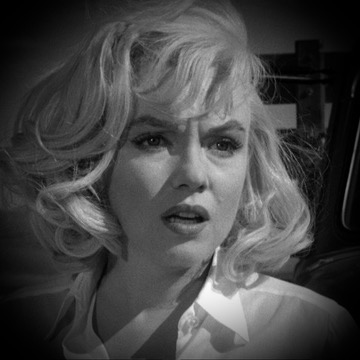
    Marilyn Monroe was one of the most famous movie stars of all time. Many people have tried to explain (and others have tried to dismiss) the powerful impact her presence had on the consciousness of America…and the world. She combined sexuality and innocence; passion and humor. But she also had a wisdom that is just beginning to be revealed.

    “Most humans realize that they are play multiple roles throughout their lives. But what they don’t realize is that multiple spirits are also playing multiple roles through them.”

    PDF Version

    [/et_pb_text][et_pb_toggle title=”Full Story Text” _builder_version=”4.16″ _module_preset=”default” global_colors_info=”{}”]

    Marilyn Monroe

    It’s 5 a.m. The morning after a blizzard. The full moon has just reappeared, casting an eerie metallic blue-gray cast across the rolling surface of snow, elongating the spectral shadows of trees as if they were caught in the act of some arcane ritual. Everything is black, white, and haunting gray.

    Maslow just woke up. Now he stares out the window above the stove waiting for the water to boil for coffee. Venus sits above a faint promise of dawn. She, too, seems to be exposing herself—a little brighter than the occasion calls for.

    He puts on muck boots and walks outside, the coffee cooling quickly. His feet know every knob and crevice on the path to his cabin out back, but the snow changes the calculus of his steps. A little coffee splashes over the lip of the cup.

    In the reflected light, the ghostly forms of a car in the driveway, shovel against a barn door, and snow-covered bird feeder feel somehow off-limits, as if unwilling or unable to come alive in the human world until rekindled by the sun.

    Inside the cabin, the moon pours through the old drafty Palladian window, which has let the last of the stove’s heat escape during the night. He glances at the indoor thermometer. Twenty degrees. He opens the stove, stirs the coals, and begins to feed it with slivers of kindling. As the temperature climbs— 24°, 28°, 31° —he paces the frozen floor in heavy socks, drinking his coffee, stopping every few minutes to load increasingly larger pieces of split beech and oak. 34°, 38°, 44°. The moon begins to be filtered by some light clouds above the horizon and the delicate pattern of high oak branches. Soon the fire is hot enough to sit close to without shivering.

    He remembers noticing this very same full moon late the previous afternoon in the eastern sky. Now almost 14 hours later, it is still a tree-line away from the horizon. He pictures it traveling in an arc similar to the high-summer sun—not

    Waking the Dead — Marilyn Monroe 2

    surrendering to the horizon until the last possible moment. Is it like this every January? Or does the moon truly follow a calendar all its own? Why has he never thought about this before?

    The night sky begins to segue into a deep indigo cast, the first sign of the rising sun. In another few minutes, a chickadee, somewhat tentative, will arrive at the feeder, take a sunflower seed, crack it open, and then announce to its friends that day has begun and the coast is clear.

    The stove has come fully alive. Maslow’s jeans get so hot he has to push his chair back.

    You might think that for those who travel the numinous trails of spirit, dawn would be the time to skedaddle, to disappear dreamlike along with the penumbras of night. But Maslow’s soul mates aren’t bound by earthly light. And he is not dreaming.

    He knows someone is close by. The signature stillness in the back of his throat heralds a whisper in his ear or a wholesale assault on his senses. This morning it will be the latter.

    “But, soft! What light through yonder window breaks?” Maslow smiles to himself. For Shakespeare, the answer was radiant Juliet, brighter than any sun. For Maslow it is a creature of the moon.

    49°, 57°, 63° and still rising.
    Closing his eyes he feels her sitting on his lap, uncomfortably heavy—from her

    timeless burdens, not weight. Her arms drape around his shoulders, head resting against his. The collar of her terry cloth robe on his neck. It feels like the morning after. They are both sleepy. Her breath is warm in his ear. He has to lean closer to hear.

    Who is she?

    © 2021 David Blistein

    Waking the Dead — Marilyn Monroe 3

    “I keep begging to be cast in a different role,” she’s whispers. “I’ve played this one for so long—the ditsy, drugged, delusional seductress who scares them all to death. Drones that most of them are. They battle for the right to conquer me, thinking that will bring them peace. But it only reveals a deeper, more urgent yearning.”

    Her head stirs from Maslow’s shoulder. She cocks it as if he’d asked a question. He catches a whiff of Chanel #5. It’s her.

    He can feel her smile as she rises lazily from his lap, walks over to the far wall, and looks at Maslow’s prize possession—an illustrated scroll of human history, with hundreds of images and captions, that covers five thousand years in twenty feet.

    Hands on hips, she nods appreciatively. First slowly. Then more insistently. An engine revving.

    She walks over and puts her fingertip on the far left edge and begins to slide it seductively across two thousand years of ancient history until she arrives at an image. It’s too far away for Maslow to see. But, after turning to wink at him, she reads its caption as if she were some esteemed professor of Historical Relativism:

    “’Paris son of Priam visited Greece and carried away Helen, wife of Menelaus King of Sparta 1204. Menelaus assembled the princes of Greece with their forces under the command of Agamemnon (Bro. of Menelaus)’ —I like that…Bro’— and, with a large armament, sailed to Troy, and after a siege of 10 years, took the City by stratagem’…stratagem, I like that too…sounds rather seductive, no?—and destroyed it 1184 B.C.’ Ahh, if they only knew…”

    She continues walking slowly down the centuries, teasing them with her finger, laughing at some images, grumbling at others. She reaches Jesus…Maslow can tell…it’s the largest image…dead center on the timeline. Taps her finger on the

    © 2021 David Blistein

    Waking the Dead — Marilyn Monroe 4

    crucified forehead. Shakes her head slowly. “He had but one true apostle. And she’s nowhere to be seen.”

    When she reaches the Middle Ages, she stops for a closer look and bursts out in laughter. “‘Chivalry commenced in 912. The Knights swore to be true to their trusts as the champions of God and the Ladies.’ Champions? Hah! Rape by any other name! Even God was abused. Nobody won. Not even the nameless.”

    She turns back to Maslow to see if he gets the point and laughs when she sees the look on his face.

    As she slides her finger another few hundred years, Maslow carefully stands up, a little dizzy at first, and begins to move closer, barely daring to blink. He needs to know what she is looking at. A small image of a women at a stake. Joan of Arc? No. He looks closer. America. 1600s.

    “Yup, that’s Puritan values for you. Can’t control them? Well, then, tie ‘em up and light the match!”

    She strokes her finger further across the timeline, pausing in mid-century. The twentieth. Stopping at a yellow sliver—the presidency of JFK—just three years in human time. A lifetime for her. Albeit a short one.

    She begins lecturing again, but now like a schoolroom teacher. The most beautiful schoolroom teacher in history. Wearing a bathrobe, no less.

    “I used the boys. The boys used me.” She giggles a little. “All’s fair…” She breaks briefly into song running her hands over her thighs. “Happy Birthday, Mister President.”

    Maslow blinks. The bathrobe dissolves into a sequined dress, and then directly into a prim schoolmistress’s black suit with big buttons and a wide white collar.

    “Ah the clever little boys and their cover-ups. They’d cover up their own mothers if they had the chance. Well, I died with a few secrets of my own. Certainly not the ones about sex, nor even particularly death. Those were just

    © 2021 David Blistein

    Waking the Dead — Marilyn Monroe 5

    Trojan Horses that concealed the true mystery—how hard we’ve tried for centuries to save them from themselves.

    Maslow tries to stay calm. He is juggling multiple worlds, times, ideas, connections. She feels his confusion and turns to give him the full-glow knowing smile, her teeth sparkling from some unseen source of light.

    “Jack thought I took our relationship too seriously. Hah! If he had known what was good for him, he would have taken it more seriously. My job, as always, was simply to bring the boys together.”

    Gone now is the innocent seductress. Replaced by an emotional whirling dervish, rapidly changing tone, attitude, and intimacy. Wiser than her years…or even her lifetimes. “Now where was I? Oh yes, Trojan Horses…”

    Now, with a little twinkle in her eye, she walks—this time, her famous “horizontal” hip-swinging walk, all the way back to ancient Greece and then returns again to the 1950s where she spins around, flings her arms back as if to burst into song, and smiles widely as she imitates the fake baritone of a 50’s movie trailer:

    “With good old Joltin’ Joe as the brooding and not-quite immortal Achilles, and countless men taking turns (remember that phrase)—play fair, now boys—at supporting roles: the cuckolded Menelaus, the ravaging Paris, and the brave, but sanctimonious Hector and Agamemnon, both trying to defend their brothers’ honor while getting a little action on the side…eh Agi, eh Bobby? Not to mention all those dear, noble, elderly, modern-day Nestors and Priams, particularly kind Isidore, Arthur’s father. The only real one I ever had. And the legion of lovely Clytemnestras, stabbing their wandering husbands upon their return, even though they themselves had also taken lovers in the meantime! Hah!… Paula Strasburg was an excellent Sibyl, don’t you think? Or maybe Ophelia? A little dated perhaps, but I still cannot fully shake the hold she has on my spirit.”

    © 2021 David Blistein

    Waking the Dead — Marilyn Monroe 6

    Her monologue had begun slowly but now rises to an ecstatic pitch. Maslow’s mind is a mish-mash of insight and innuendo as chaotic schematics of relationships spanning three thousand years zigzag across his neural pathways like an imploding organizational chart.

    After a dramatic method-inspired inhale and exhale of breath, she begins again:

    “Taking turns. I told you to remember that phrase. How else can I explain just how porous humans are, without destroying your sense of self altogether?”

    Brilliant, Maslow thinks. Brilliant. Yes. Of course. Humans are porous. Why do I keep looking for boxes to put these people into when they have come from so far away to break out of them once and for all?

    Marilyn raises her eyebrows knowingly. “You’re getting closer. Look how Arthur always cast himself as the cuckolder and then the cuckoldee, the idealist and then the betrayer. By the time he threw me at the celluloid cowboys, he really had no idea which end was up. (Something I never lost sight of by the way.) But give the man credit. Knowingly or not, he captured the way spirit informs flesh. Even when they tie you up for it.

    She sees Maslow shaking his head, trying to get it all straight. “A little slow on the uptake again…Mr. Scribe?”

    Before he can respond or defend himself, she returns to teacher mode, speaking slowly, distinctly, and now without condescension. She might as well be giving a lecture in a philosophy class or a sermon on the mount.

    “Most humans realize that they play multiple roles throughout their lives. But they don’t realize that, at the same time, multiple spirits are playing multiple roles through them. And the question is always the same—can I stay on course, and remain true to my eternal self? So before you start running around and making a fool of yourself, my dear Scribe, by starting rumors that I was Helen of Troy or,

    © 2021 David Blistein

    Waking the Dead — Marilyn Monroe 7

    God-forbid, the blessed virgin I must warn you that little tidbit is barely the tip of the iceberg. After all, is it my fault that Jack ignored my Cassandra warnings?”

    “Whoa…whoa…” Maslow thinks to himself, although he has learned by now that thinking to himself is like shouting out loud to these people. What had she warned Jack Kennedy about? She died a year before he was shot. She was just teasing him.

    “Whoa yourself…” she answers with full pouty petulance. She retreats into herself, walking away from the timeline on the wall and right towards Maslow. It feels like she is looming over him as she suddenly starts screaming: “Siege Troy. Blockade Cuba. You think these are the ravings of a mad woman? Hah! Pass the Nembutal, Chloral Hydrate, Champagne, and Vodka and I’ll really start telling some truths! Ah, what the hell,” she sighs now and shrugs, backing away, “I don’t need any sleeping aids where I am now…that’s one of the many fringe benefits.”

    She looks out the window at the chickadees joining their lead scout at the feeder. The image seems to cheer her up and she turns back to Maslow with a bright smile, as if remembering something she’d been meaning to say:

    “And how ‘bout the lovely Lady Diana?” She holds up one finger. “She appears on earth a year before I die…plenty of time for us to…uh…collaborate during her formative years.”

    A second finger: “Her mother was almost as absent as mine. Although at least she knew who the hell her father was. Unlike yours truly.”

    Now a wink and a third finger. “She also had a face that could launch a thousand ships.”

    Maslow pictures the young Diana. The smile that could embrace and transcend human lust. Millions of men—who might not agree on anything else, were joined in their adoration of these women. Although, unfortunately, their love was anything but unconditional.

    © 2021 David Blistein

    Waking the Dead — Marilyn Monroe 8

    “Bingo!” she says encouragingly. “But you can’t blame us for trying. It would help if you let us finish our jobs.

    She stops and looks at him quizzically, as if deciding how far she should go.

    At that moment, Maslow remembers her stop on the timeline at the station of the Cross. “Mary Magdalene,” he says out loud.

    “Bingo,” she says again, and with some unexpected kindness. “Sometimes it takes two to be one. So complicated for your poor little pea brain,” she clucks sympathetically.

    She crosses her arms and holds up four fingers on both hands: “Oh, how hard we’ve tried to dissolve the opposites: Troy and Greece, Jew and Christian, Washington and Russia, war and peace, love and sex, puritan and profligate, communism and democracy; the royalty and the people, the mythic and the human, the Father, the Son, and the Holy Ghost! Hah! Achilles and Hector. Joe and Jack. Charles—and legions of other men—and their true natures.”

    She grows grown manic again, but now stops and takes a deep breath. Making it very clear she can turn it on or off. She looks appreciatively at the dumbfounded look on Maslow’s face and says: “That was a take wasn’t it? Put that one in the can Mr. Huston!” She giggles as a bright yellow male goldfinch lightly hits the window as if trying to reach her.

    “Did you know, by the way? It was shortly before our marriage…Arthur and I. We were driving down a twisting dirt road trying to escape from a French photographer and journalist. They crashed behind us, killing the journalist. Which, I thought, made Diana’s exit a rather elegant touch. So many have died in pursuit of us.”

    Maslow is stunned. The connection is obvious and eerie.
    “I’ve still got it, don’t I? See why they call us bombshells? Kaboom!”

    © 2021 David Blistein

    Waking the Dead — Marilyn Monroe 9

    And with that she is totally off and running again. The words pour forth in one furious deluge. Her voice rises and lowers, switches back and forth between determined seriousness and amphetamined leaps of faith. She no longer looks at Maslow, but rather paces the floor, throwing one arm towards the timeline and the other to the rapidly lightening indigo sky, dropping all pretense of her multiple personalities being anything less than one whole glorious spirit.

    “Remember the rage of all women pouring out of me into the desert sky. The rage of women who have been abandoned, abused, and ignored. The rage of women who know that the wildest horses lie in the human heart. A rage so powerful, it could force those three wounded stars to finally choose themselves over a woman—to look to themselves instead of me to find out who the hell they really are and what the hell they’re really made of.

    “Of course, that was fiction.”

    She calms down and looks right through Maslow. “Me too?” She says slowly. “You people have no idea.”

    With that, she walks over to the door, flings it open dramatically, and steps out. A moment later, she turns back to Maslow and adds breathlessly: “Venus is spectacular this morning,” before disappearing into the dawn.

    © 2021 David Blistein

    [/et_pb_toggle][et_pb_code _builder_version=”4.16″ _module_preset=”default” custom_margin=”8px||||false|false” global_colors_info=”{}”]

    [/et_pb_code][/et_pb_column_inner][/et_pb_row_inner][/et_pb_column][/et_pb_section]